


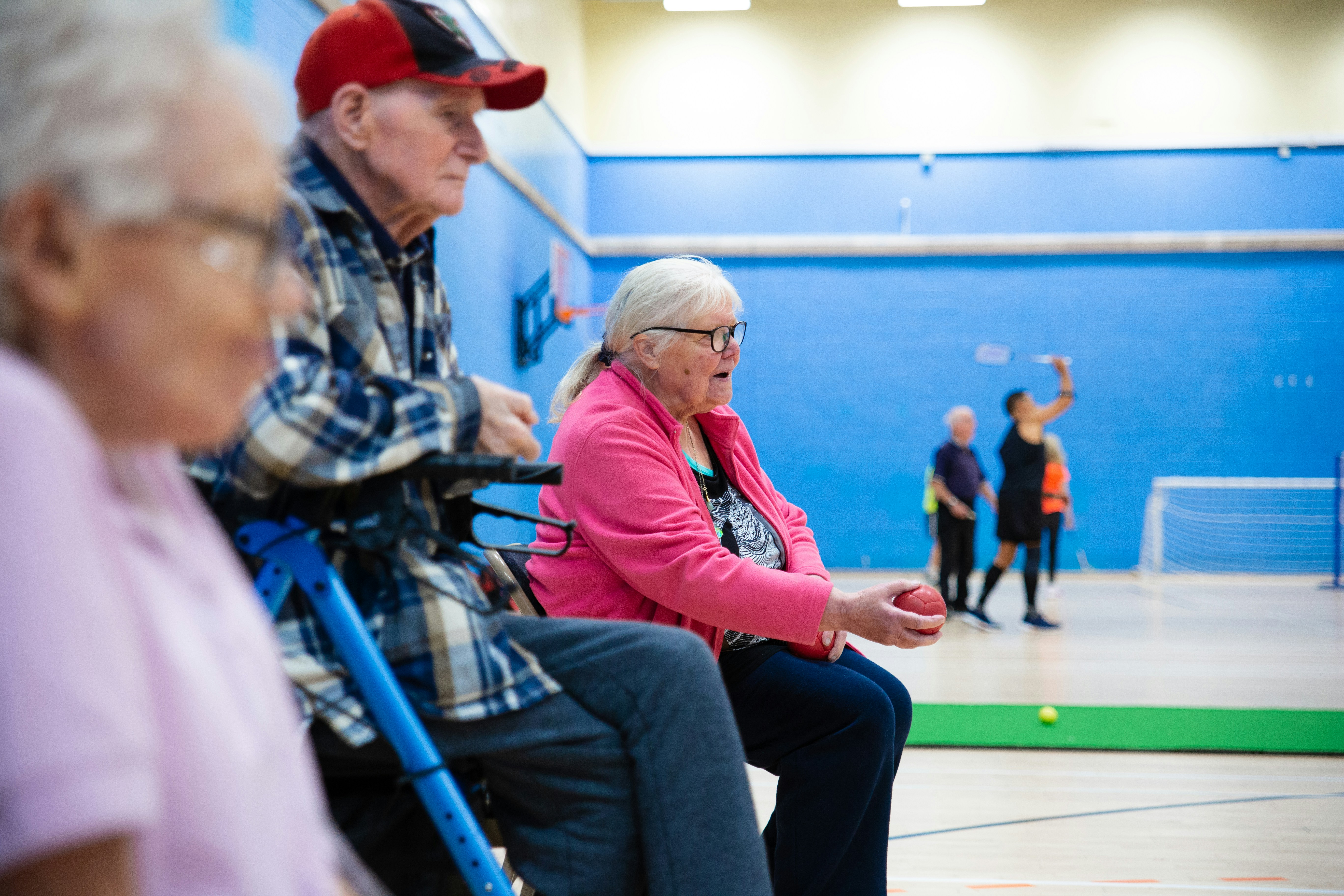
Loneliness used to be treated as a sad but private part of growing old. Today, doctors, insurers and public health agencies increasingly treat it as a health risk in its own right, one that can be measured, screened for and treated.
According to the National Academies of Sciences, Engineering, and Medicine, 43 percent of adults aged 60 and older report feeling lonely, and about 24 percent of those 65 and older are socially isolated. The evidence linking those experiences to illness, early death and higher medical costs has grown too strong to ignore. Here are seven reasons social connection has moved from the community center to the clinic.
1. Isolation shortens lives as much as well-known risk factors
Social isolation raises the risk of early death by roughly 26 to 32 percent. A 2015 meta-analysis led by psychologist Julianne Holt-Lunstad found that isolation, loneliness and living alone raised the likelihood of early death by 29, 26 and 32 percent, an effect comparable to well-established risks such as obesity.
The U.S. Surgeon General's 2023 advisory compared the risk to smoking up to 15 cigarettes a day. That comparison changed the conversation. A risk factor that strong belongs in a medical chart, not just a social worker's notes.
2. It takes a measurable toll on the heart and brain
Poor social relationships are linked to a 29 percent higher risk of heart disease and a 32 percent higher risk of stroke, according to the National Academies. A 2022 American Heart Association scientific statement called isolation and loneliness under-recognized drivers of worse heart and brain health.
The pathways are physical, not just emotional. Chronic loneliness is associated with higher blood pressure, elevated stress hormones and ongoing inflammation. Isolated people are also less likely to exercise, eat well, take medications as prescribed or notice warning signs early.
3. Social connection helps protect against dementia
Social isolation is associated with roughly a 50 percent higher risk of dementia, according to the National Academies. The 2024 Lancet Commission on dementia lists social isolation among 14 modifiable risk factors that together may account for nearly half of dementia cases.
Conversation, shared activities and relationships keep the brain engaged and may build "cognitive reserve" that helps it cope with age-related changes. Programs like Televeda's online brain games combine mental challenge with meeting new people. With no cure for most forms of dementia, a risk factor people can actually change is valuable to clinicians and families alike.
4. Loneliness and mental health feed each other
Loneliness is closely tied to depression, anxiety and suicidal thoughts in later life. The Surgeon General's advisory names isolation and loneliness as independent risk factors for depression. The relationship runs both ways: feeling disconnected can trigger depression, and depression makes people withdraw further.
Later life brings many triggers for that cycle, including retirement, the death of a spouse or friends, hearing or vision loss and reduced mobility. Treating depression without addressing isolation often means treating only half the problem. Televeda's peer support groups offer one way in, and its article Suicide Prevention Begins With Connection explains why relationships matter so much.
5. Isolation drives up healthcare costs
The Surgeon General's advisory estimates that social isolation among older adults adds about $6.7 billion a year to Medicare spending, largely through extra hospital and nursing facility stays. Among heart failure patients, loneliness has been linked to a 68 percent higher risk of hospitalization and 57 percent more emergency visits (National Academies).
Some of that cost comes from simply having no one around. Without someone to drive them to appointments, pick up prescriptions or notice a decline, small problems become emergencies. For health systems and insurers paid on outcomes, connection is now a cost-control strategy; Televeda breaks down the numbers in The ROI of Reducing Social Isolation in Aging Populations.
6. More older adults are aging alone
The population is getting older fast. Adults 65 and older made up 18 percent of Americans in 2024, up from 12.4 percent in 2004, and already outnumber children in 11 states (AARP). The Census Bureau projects they will outnumber children nationwide by 2034.
At the same time, more older people live alone, have fewer children, or have family spread across the country. Many want to age in place at home, which is good for independence but can mean long stretches without contact. The traditional safety net of nearby family is thinner than it used to be.
7. Health systems now have the tools and mandate to act
Social connection has gained official standing. The U.S. Surgeon General declared loneliness a public health epidemic in 2023, and the World Health Organization launched a Commission on Social Connection that November. Its 2025 report linked loneliness to an estimated 871,000 deaths worldwide each year.
Clinics are responding with practical measures.
- Screening. Brief questionnaires, such as the three-item UCLA Loneliness Scale, during annual wellness visits.
- Social prescribing. Referrals to walking groups, volunteering, arts programs or virtual options like Televeda's live events and games.
- Health plan partnerships. Plans are working with programs such as Televeda's population health services, which pair care navigators with welcoming social groups.
- Technology. Video calls, hearing aids and digital literacy support that make staying in touch easier.
The bottom line
Social connection is no longer a "nice to have" for older adults; it is part of staying healthy. The good news is that it is one of the few risk factors almost anyone can help change.
A regular phone call, a shared meal or a ride to a weekly class can matter as much as a new prescription. Families can check in more often, clinicians can ask about loneliness as routinely as they ask about blood pressure, and communities can make it easier for older neighbors to stay involved. For a simple place to start, Televeda offers free live online classes and resources for individuals and caregivers.
TL;DR
- Isolation raises the risk of early death by about 26 to 32 percent.
- It's linked to a 29 percent higher risk of heart disease and 32 percent higher risk of stroke.
- It's tied to about a 50 percent higher risk of dementia.
- Loneliness and depression feed each other in later life.
- Isolation adds about $6.7 billion a year to Medicare spending.
- More older adults are aging alone as the population grays.
- The Surgeon General and WHO now treat connection as a public health priority, and clinics are acting on it.
Sources
- Social Isolation and Loneliness in Older Adults, National Academies of Sciences, Engineering, and Medicine (2020)
- Loneliness and Social Isolation as Risk Factors for Mortality, Holt-Lunstad et al., Perspectives on Psychological Science (2015)
- Our Epidemic of Loneliness and Isolation, U.S. Surgeon General (2023)
- Social isolation, loneliness can damage heart and brain health, American Heart Association (2022)
- Dementia prevention, intervention, and care, 2024 report, The Lancet Commission
- WHO Commission on Social Connection, World Health Organization (2025 report)
- Demographic Turning Points for the United States, U.S. Census Bureau
- Adults 65-Plus Now Outnumber Kids in 11 States, AARP
- Televeda, virtual events, peer support and population health programs for older adults








.svg)
.svg)