


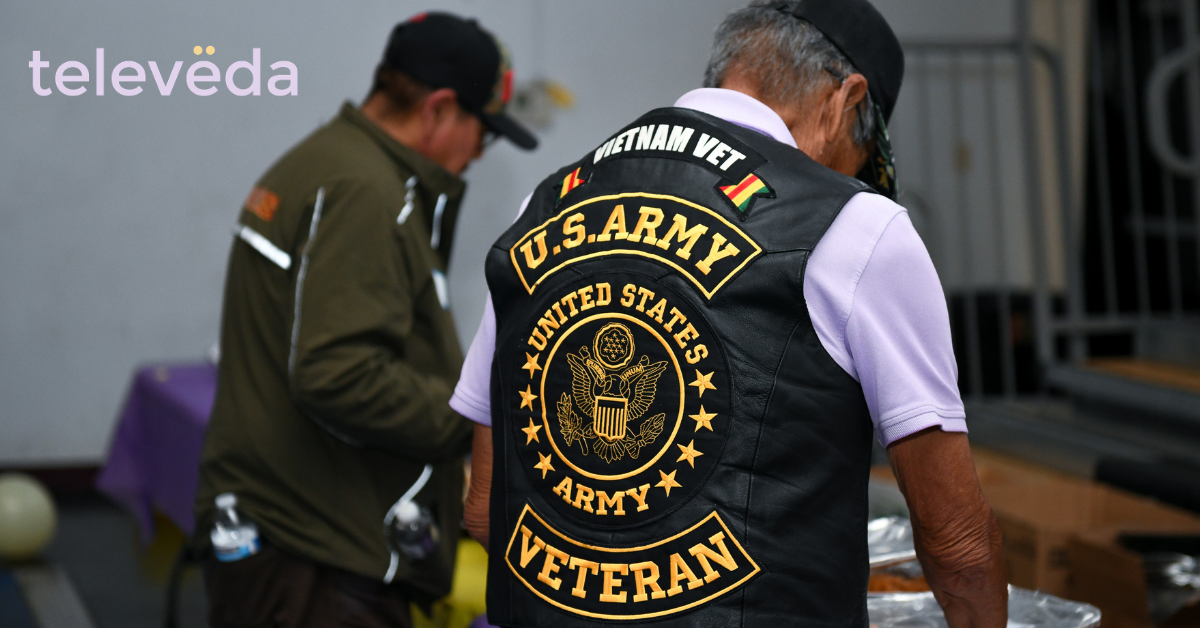
Every September, Suicide Prevention Month asks the country to talk about something it too often avoids. It is easy to treat mental health awareness months as a calendar formality, a week of graphics and hashtags that fades once October begins, but the numbers behind veteran suicide do not follow a calendar. In 2022 alone, an average of 17.6 veterans died by suicide every day, and veterans overall die by suicide at a rate roughly one and a half times that of the general adult population. American Indian and Alaska Native veterans face some of the steepest disparities of any group the VA tracks. Behind every one of those numbers is a person who needed connection before they needed a crisis line, often long before anyone realized they were struggling at all.
Why Peer Support Matters in Veteran Suicide Prevention
The years right after leaving service are often when a veteran is most at risk and least connected. Structure disappears, a built in community disappears, and the systems designed to help can feel distant or bureaucratic. That gap between active duty and civilian life shows up fast, and the data backs that up. Among veterans who separated from the military in 2019, the suicide rate over the following year reached 51.0 per 100,000, higher than for those who separated in surrounding years. It is often widest right when a veteran needs support the most.
This is part of why peer support is considered such an important piece of veteran suicide prevention. Many veterans will talk to another veteran long before they will talk to a therapist, since a peer who has lived through the same transitions can open a conversation that a clinician or a stranger cannot. Peer to peer models are increasingly seen as the missing piece in veteran suicide prevention infrastructure, precisely because they meet veterans where trust already exists. Peer support does not replace clinical care so much as it becomes the bridge that gets more veterans to clinical care in the first place, and connection itself tends to be the first and most overlooked step in prevention. That bridge appears to work in the data too: among veterans who reached out to the Veterans Crisis Line, the suicide rate in the following month was 22.5 percent lower than it had been a few years earlier, a sign of just how much of a difference a single moment of connection can make.
The Added Barriers Facing Tribal Veterans
For American Indian and Alaska Native veterans, the barriers to care run deeper than distance to the nearest VA facility. Research on veterans using VA health care found that the age-adjusted suicide rate among American Indian and Alaska Native veterans more than doubled between the early 2000s and 2018, climbing to about 47 per 100,000, compared to roughly 36 per 100,000 among white veterans. Among the youngest AI/AN veterans, ages 18 to 39, the rate has been measured as high as 66 per 100,000, the highest of any age group studied. Rural veterans overall are about 65 percent more likely to die by suicide than veterans in urban areas, and American Indian and Alaska Native veterans in rural areas face roughly twice the risk of suicidal ideation compared to white veterans.
Distance compounds these numbers. Some tribal veterans drive three to four hours to reach the nearest VA clinic, and close to 40 percent of the roughly 2.7 million rural veterans enrolled in VA care do not have home internet reliable enough to support telehealth. Add generations of cultural mistrust toward outside institutions, and a standard mental health program can feel out of reach before it even starts.
A tribal veteran mental health program has to be built with the community it serves, not simply delivered to it. One model bringing talking circles to Navajo Nation and other tribal governments shows what that can look like in practice. These circles open with ceremony, are led entirely by peers rather than clinicians, and treat traditional healing as the actual care rather than something added on top of it, letting each veteran set their own pace.
Programs like this have also drawn attention from the VA itself. VA News has featured Televeda's work directly in Building the Bridge to Care: How Talking Circles Are Reaching American Indian and Alaska Native Veterans and in Community Healing for American Indian and Alaska Native Veterans. This month, VA News also ran a Suicide Prevention Month partner spotlight on Televeda, VRCN Partners Unite to Support Veterans Ahead of Suicide Prevention Month, on how culturally responsive programs build the kind of trust that reaches veterans who might otherwise go unreached.
What Effective Veteran Peer Support Tends to Have in Common
Across a veteran suicide prevention peer support program and a tribal veteran mental health program, a few principles show up again and again:
- Peers lead the conversation, not clinicians alone
- Support starts with connection, not with a diagnosis
- Programs are shaped by the community they serve, not handed down to it
- Access matters as much as quality, particularly in rural and low bandwidth areas
- No veteran should have to explain their service to be believed
Organizations exploring these kinds of programs, including government agencies, health plans, and veteran service organizations, can see how government focused programs like these are structured or look at how peer group support fits into the bigger picture.
If You or a Veteran You Know Needs Support Right Now
Suicide Prevention Month is not just an awareness campaign. If you or someone you know is struggling, help is available right now. Veterans and service members can call the Veterans Crisis Line at 988 and press 1, text 838255, or chat at VeteransCrisisLine.net. This is a sensitive topic, and if you are personally affected by anything in this post, we encourage you to use these resources or reach out to a trusted provider.
TL;DR
- Veterans die by suicide at roughly one and a half times the rate of the general adult population, an average of 17.6 per day in 2022, with the year following military separation carrying especially elevated risk.
- Peer support tends to reach veterans earlier than clinical care alone, and Veterans Crisis Line contact alone has been linked to a 22.5 percent drop in suicide risk in the following month.
- American Indian and Alaska Native veterans face some of the widest disparities of any group, with age-adjusted suicide rates near 47 per 100,000 and rural access barriers, including limited broadband, compounding the risk.
- Tribal veteran mental health programs, such as talking circle models, work best when they are built with the community rather than delivered to it.








.svg)
.svg)