

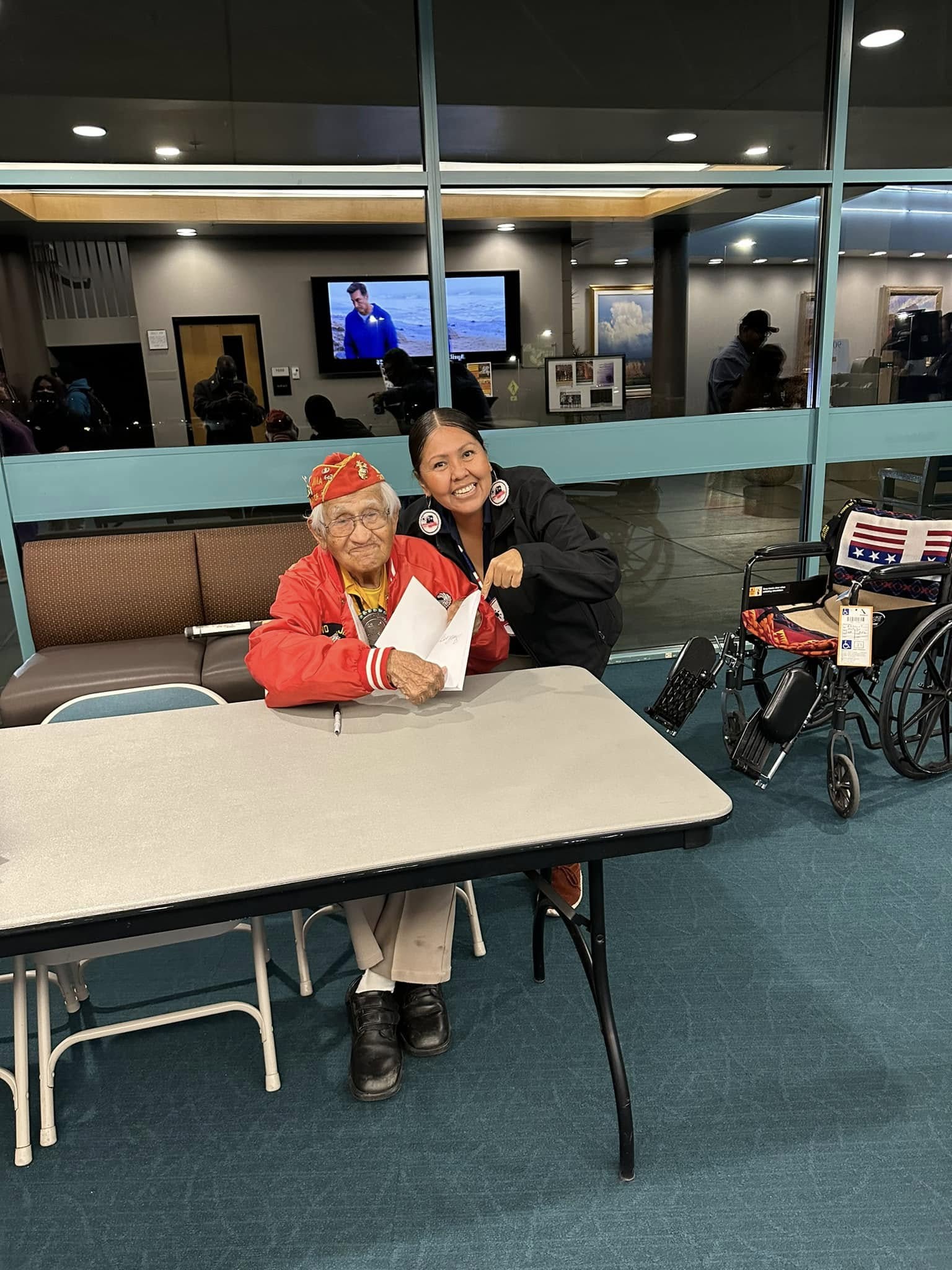
Every year, roughly 200,000 service members take off the uniform for the last time and become veterans. That number comes from the Department of Defense and shows up in nearly every study of the transition, from VA's own Transition Assistance Program materials to a Congressional Research Service report on TAP. It is a big enough group to fill a mid-sized city, and they all pass through the same strange doorway at slightly different speeds.
The conventional story about that doorway is that it opens onto a void. You lose the structure, the mission, the people who knew your last name before they knew your first. Then you spend a year or two trying to rebuild all of it from scratch. That story is real for a lot of people. The Pew Research Center found that about half of post-9/11 veterans described readjusting to civilian life as somewhat or very difficult, and only about half said the military prepared them well for it.
But it is not the only story. And the version we hear less often may be the more useful one, because it shows what happens when someone closes the gap before it opens.
"I didn't really have the luxury of imagining"
Bernadine "Bernie" Tyler-Wilson served in the US Army and moved almost directly from active duty into a Federal Government job. When we asked her what she expected the transition to be like, her answer reframed the question.
"I didn't really have the luxury of imagining what my transition would be like. My priority was supporting my family, so I moved quickly from active duty into a Federal Government job. There wasn't much downtime to process that I had left the Army. Looking back, I expected there might be more of an adjustment period, but reality was that I had to keep moving. In many ways, I went straight from one mission to the next, just in civilian clothes."
One mission to the next, just in civilian clothes. That line is worth sitting with, because it describes a transition that was structurally continuous even though it was formally a complete break. She left an institution. She did not leave the work.
Her path is more common than people outside the government realize. Veterans make up a large share of the federal workforce — the Partnership for Public Service notes that DoD and VA alone employ more than 435,000 of them, with agencies like the Department of Transportation and GSA running well above a quarter veteran. That concentration isn't an accident: veterans' preference has been part of federal hiring since the Veterans' Preference Act of 1944, and OPM's data shows veteran-specific hiring authorities accounting for a meaningful slice of veteran new hires each year. In other words, Bernie's jump from active duty straight into a federal job wasn't a fluke of her particular situation — it's a well-worn path that federal hiring is specifically built to make easier, which is exactly why the emotional weight of her story (the transition happening without anyone helping her process it) is worth paying attention to.
The moment it became real
We asked Bernie about the moment the gap between active duty and veteran life became concrete. She did not describe a crisis. She described an absence.
"Honestly, I didn't experience a long in-between period because I moved directly into Federal employment. If there was a moment that made it real, it was realizing that I was no longer accountable to military routines like formations, PT, and the day-to-day structure of Army life. I was still doing similar work professionally, but I was no longer living under military rules. That was when it really sank in that I had become a veteran rather than an active-duty Soldier."
The recognition came through the calendar, not the job description. Same kind of work, no formation. This is the part of the transition that career planning tends to miss entirely, because it is not about employment at all. It is about the disappearance of a framework that told you where to be and when.
Researchers have circled this for years. Descriptions of the transition consistently point to the loss of routine, defined roles, and built-in camaraderie as the thing that makes civilian life feel foreign, separate from whether the paycheck arrives.
Continuity as a strategy
Bernie's third answer is the one that most complicates the standard narrative about lost purpose.
"My sense of purpose didn't change as much as it does for some veterans because I was able to continue doing similar work as a Federal employee. That continuity made the career transition much easier. What did change was my lifestyle. I didn't miss the military strict rules that came with active duty. I was ready to move forward, build my civilian career, and enjoy having more independence while still serving in a different capacity."
Still serving in a different capacity. The purpose did not have to be rebuilt because it was never set down. What changed was the amount of control she had over her own day, and she experienced that as a gain rather than a loss.
That is a genuine outcome, not a lucky accident, and it points at something actionable: the size of the gap depends heavily on how much continuity you can carry across it.
Her advice: build the bridge before you need it
"Everyone's transition is different, but my advice is to have a plan before you separate. Make your disability claim a priority, start looking for employment early, and take advantage of the resources available before you leave active duty. Some people can afford to take time off, but with today's economic challenges, many of us need to transition quickly. I was fortunate to secure a Federal Government job right away, and that allowed me to focus on supporting my family instead of worrying about my next paycheck. Being prepared made all the difference."
Every piece of that maps onto a program that already exists and that most separating service members are eligible for.
The disability claim. VA's Benefits Delivery at Discharge program lets you file for disability compensation between 180 and 90 days before separation, and its stated goal is a decision within 30 days after you separate. VA is direct that processing times are much shorter for pre-discharge claims, and that filing while you still have access to the military medical system can make service connection easier to establish. VA's own BDD fact sheet adds the detail people miss, which is to request your service treatment records at the 180-day mark, because you cannot file without them — though if you file your BDD claim online, VA will get your service treatment records for you.
Employment, early. DoD SkillBridge lets eligible service members spend up to their last 180 days in civilian training, an apprenticeship, or an internship while still drawing military pay and benefits. More than a thousand organizations participate, including VA itself.
The resources you already have. TAP starts a year before separation, or two years before retirement, and is mandatory for most people leaving service. Using it is the difference between having a plan and having a separation date. The federal government's own analysis is blunt about the cost of skipping it. Performance.gov reports that roughly half of recently separated veterans do not connect with available benefits and resources for years, and sometimes only when they are already in crisis.
The part paperwork cannot fix
Notice what Bernie's answers do and do not solve. The claim, the job, the paycheck; all of that was handled before her separation date, and it worked. What she still had to absorb was the other thing. No formations, no PT, no built-in group of people moving through the same day at the same time.
That is the piece no benefit application addresses, and it is where the gap tends to persist even for people whose careers transfer cleanly. This is the work televeda focuses on. Its Hero’s Story Project peer and group support programs exist specifically to rebuild the connection layer that separation removes, with veterans talking to other veterans rather than filling out another form.
That model is not theoretical. VA awarded televeda a contract to pilot and expand the Hero's Story Project, a culturally tailored suicide prevention program for American Indian and Alaska Native (AI/AN) veterans that combines talking circles and storytelling with evidence-based peer support, delivered virtually, in person, and both. Special attention goes to safe peer circles for women veterans and survivors of military sexual trauma. Televeda's own writing on why peer support is the missing infrastructure in veteran suicide prevention makes the case at greater length, and VA's Marketplace profile documents the early results, including 245 AI/AN veterans engaged in 2023 who had not otherwise reached out for mental health services.
If you are the veteran in question, or you support one, televeda's programs for individuals and caregivers are the place to start.
The takeaway
Bernie's transition was not easy because the transition is easy. It was smoother because the bridge was built while she was still standing on the near side of it.
Not everyone can replicate her exact path, and not everyone should. Some people need the decompression time and should take it. But the underlying principle travels i.e., the in-between period is not a fixed feature of leaving the military. It is a gap whose width you have some say over, and most of that say is exercised in the six months before your separation date, not the six months after.
If you are nervous about that in-between period, that nervousness is information. Start the paperwork. Then find your people, because the second half of the transition is the part you cannot file for. Join a televeda session or talk with our team about programs in your community.
Thanks to Bernadine "Bernie" Tyler-Wilson for sharing her experience for this piece.








.svg)
.svg)