

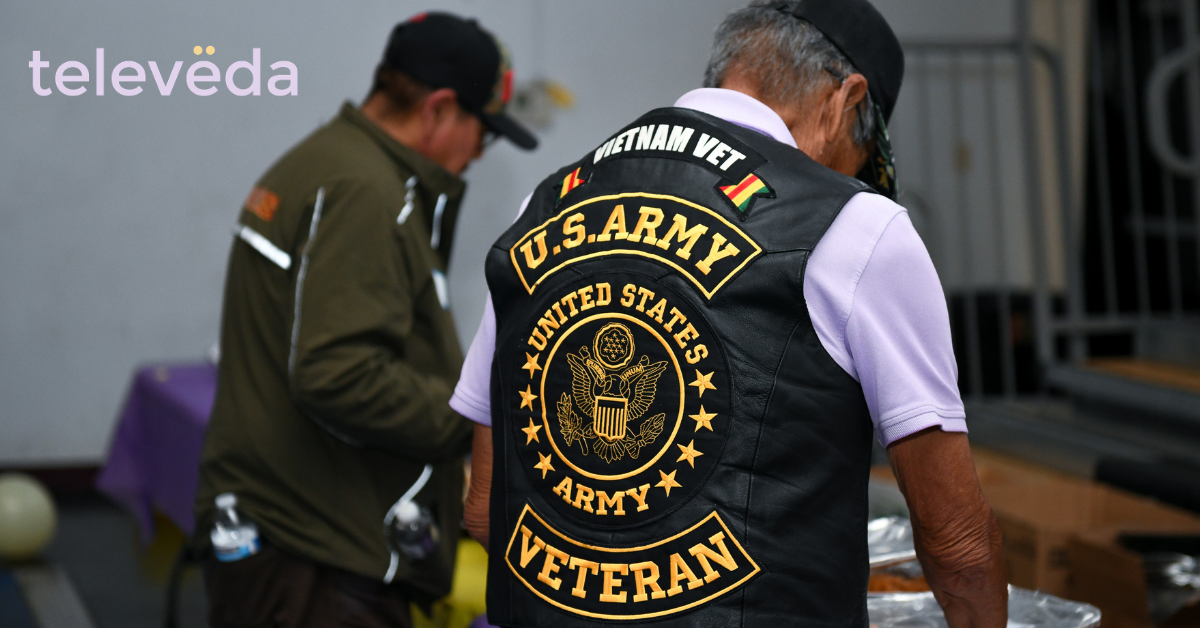
The federal government has spent decades investing in veteran mental health infrastructure: clinics, hotlines, evidence-based therapies, telehealth expansions. And yet, for American Indian and Alaska Native (AIAN) veterans, the population that serves at five times the national rate and faces the highest PTSD and suicide rates of any veteran demographic, utilization of those services remains critically low.
The problem is not access. It is trust. And trust, in Indigenous communities, is earned through culture and understanding.
The Gap Is Cultural, Not Clinical
The VA has made meaningful investments in reaching underserved veteran populations. But for many AIAN veterans, the path to care runs through the community long before it reaches a clinic. Cultural identity, intergenerational norms around pride and stoicism, and the particular experience of returning from military service to reservation life all shape how veterans engage with support.
Janice Talas-Denny, Televeda's Tribal Veteran Support Coordinator, notes that military service amplifies the deep-seated pride felt by Native Americans. Consequently, acknowledging psychological or emotional struggles creates a dual barrier: mental health issues carry heavy stigma within reservation communities.
These are not personal barriers. They are generational ones. And closing the gap between available services and actual engagement requires meeting veterans inside their own cultural framework first.
A Diverse Tradition of Healing
It is worth naming what "traditional healing" actually encompasses. Indigenous healing practices across North America are remarkably diverse, shaped by the distinct nations, languages, and spiritual traditions from which they arise. They include:
- Talking circles: peer-held communal spaces where story and shared experience anchor healing
- Sweat lodge ceremonies: purification rituals that address physical, emotional, and spiritual wellness
- Vision quests: solitary rites of fasting and prayer used to seek guidance and clarity
- Smudging: the burning of sacred plants (sage, cedar, sweetgrass) to cleanse spaces and prepare participants for ceremony
- Drumming and song: used to restore balance, mark transitions, and strengthen community bonds
- Plant medicine and herbalism: traditional knowledge of healing plants passed through generations
- Medicine bundle practices: sacred objects tended by healers to protect and restore wellbeing
- Storytelling and oral tradition: narrative-based transmission of identity, resilience, and cultural continuity
No single practice represents all Indigenous peoples. But what these approaches share is a fundamentally relational, holistic understanding of health, one in which the individual cannot be separated from their community, their ancestors, or their spiritual life. That worldview is not supplemental to healing. For many AIAN veterans, it is the precondition for it.
What Talking Circles Actually Look Like
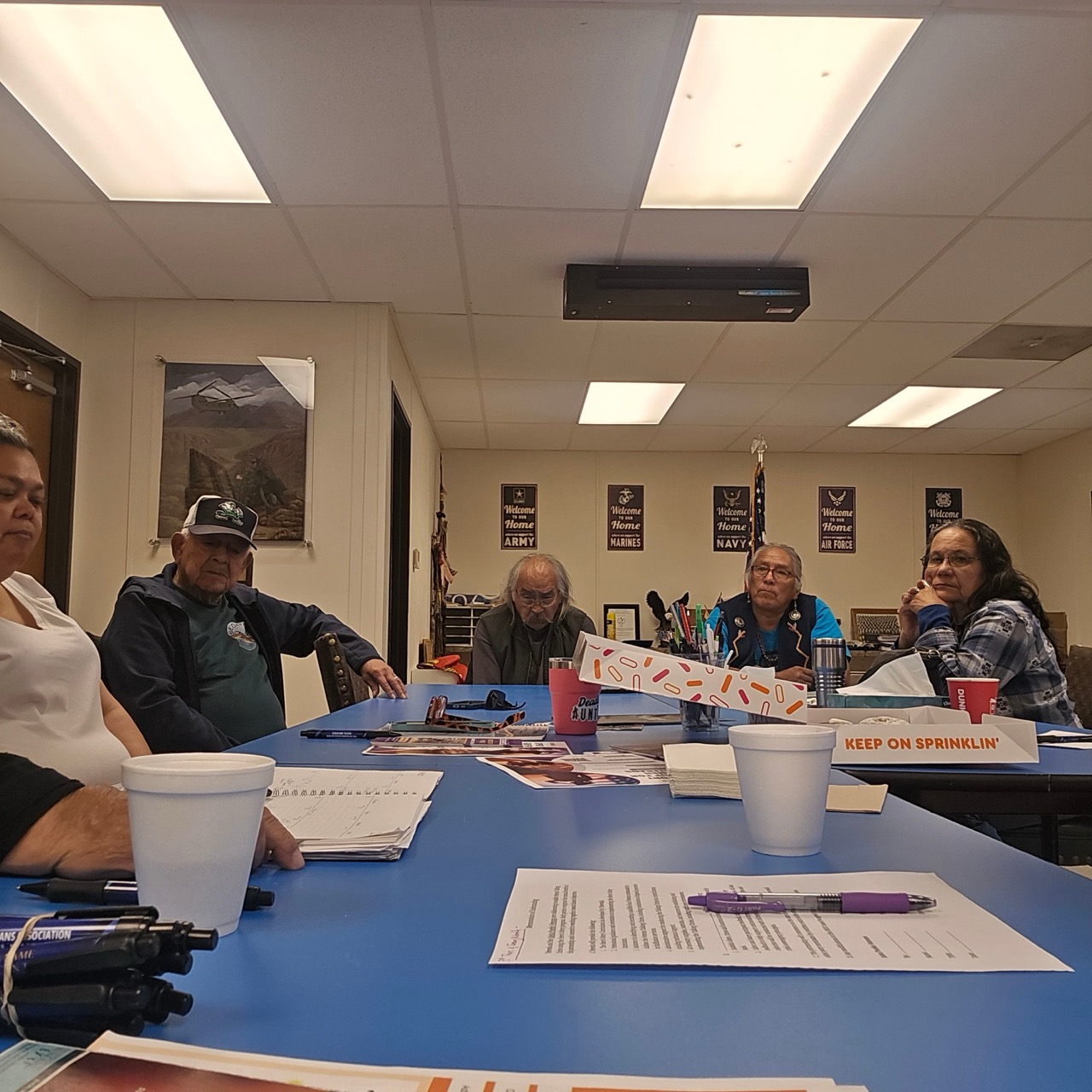
Of all these practices, talking circles are the foundation of Televeda's Hero's Story Project, and for good reason. They are not group therapy. They are not a clinical intervention dressed in cultural clothing. They are something older, more durable, and more effective for this population as a first point of engagement: a peer-led, community-held space where story is the mechanism of healing.
The structure is intentional. Circles open with traditional ceremony, including prayer, smudging, and song, as determined by the facilitator and the community they serve. Veterans introduce themselves, share their branch and years of service, and the conversation flows from there. No diagnosis. No treatment plan. No clinical notes. Just people, a shared history, and the space to be heard.
"I always let them know that this is purely holistic," says Talas-Denny. "This is your talking circle. You run it however you want to run it."
The traditional healing aspect is not decorative. Smudging and prayer are understood in many Indigenous traditions as clearing negative energy from a space, making it safe for vulnerability. Over time, that safety compounds. "Three months into the talking circles, people are very lighthearted," Talas-Denny notes. "People are willing to share. People are joking. Openly showing joy, openly showing affection."
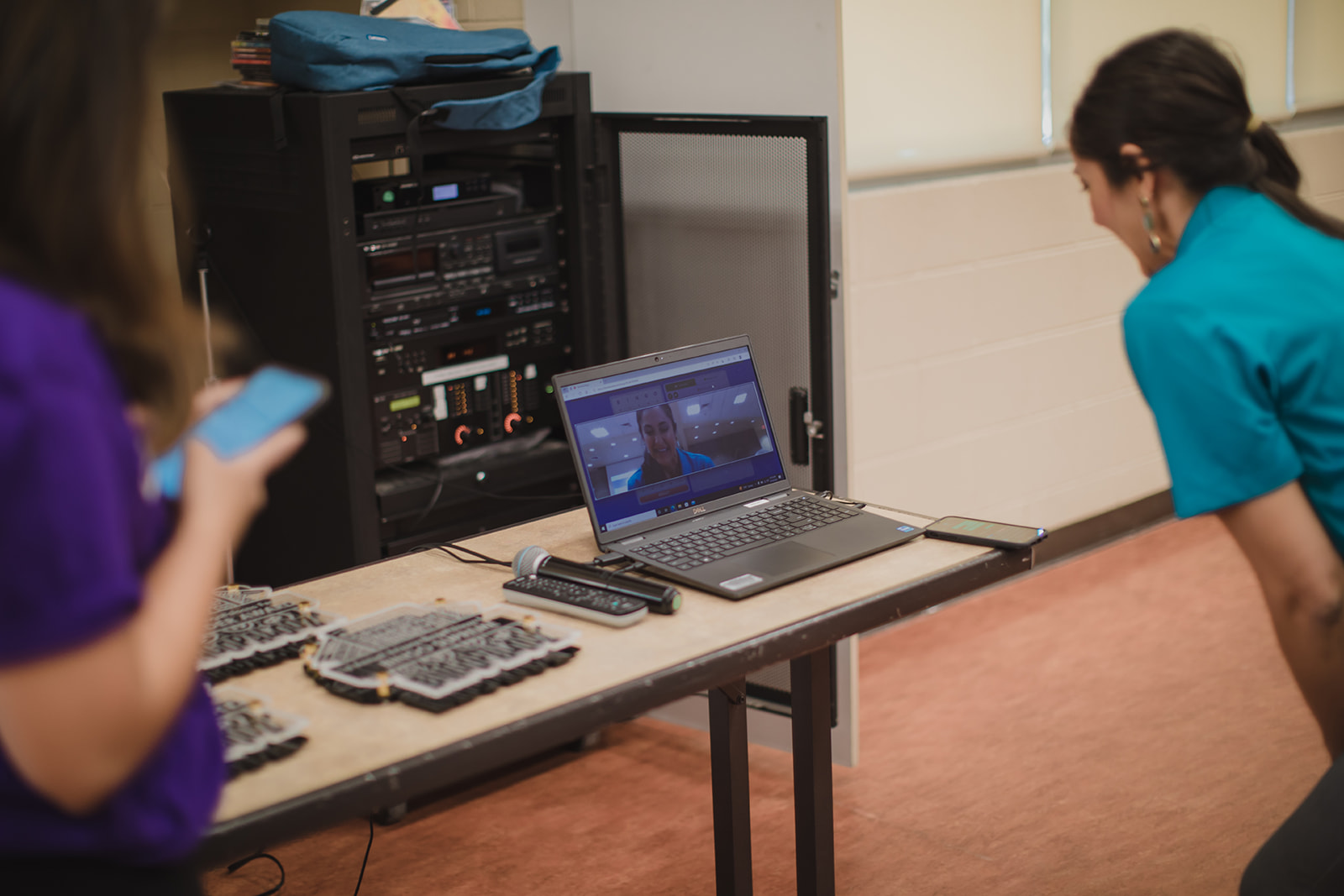
Televeda's Virtual Talking Circle (VTC) platform was designed to honor these sacred protocols digitally, incorporating kinship clan cards, a digital totem-passing ritual that preserves the one-speaker-at-a-time tradition, and Indigenous symbolism and patterns throughout the interface. The program's Hero's Story Project (HSP) Storytelling Curriculum further extends this foundation, weaving oral folklore and narrative tradition into an evidence-informed therapy model that builds resilience and social connectedness. Organizations interested in bringing this model to their communities can apply through the Tribal Pilot Subgrantee Program, linked on the HSP program page.
Talking circles also become a natural bridge to formal services. Veterans learn about VA enrollment support, state-level benefits, and financial assistance programs they did not know existed. Facilitators help veterans navigate application processes, connect with veteran benefit counselors, and access medical and military records. The community builds the trust that makes those next steps possible.
"If they need help signing up for all of those things, whatever it is, we always try to be right there to help guide them through it," Talas-Denny explains. "Because a lot of folks won't sign up purely because the application process is so daunting."
The Evidence Behind the Model
Televeda's Hero's Story Talking Circles formalized this approach into the first culturally specific, evidence-informed peer-to-peer suicide prevention program for AIAN veterans. The program was developed in direct response to rising veteran suicide rates on reservations and built in partnership with the VA's Mission Daybreak initiative.
The results: 285 veterans engaged. 100% of participants reported feeling happier and more connected after participating. 96% reported greater overall well-being. 95% reported feeling less lonely. The program won first place in the VA Mission Daybreak national suicide prevention competition in 2023, a $3.25 million federal award recognizing it as best-in-class peer-to-peer suicide prevention infrastructure.
Program data from 2025 to 2026 shows the model continuing to scale. In-person talking circles grew from an early average of roughly 5 veterans per event to a current baseline of 10 or more. January 2026 set a new record with 12 events in a single month. Navajo Tonalea averages approximately 26 veterans per event in 2026, the highest attendance rate across the entire program. Tribes show stable, consistent month-over-month attendance, reflecting growing trust and community buy-in.
Facilitators are the linchpin. The highest-performing facilitator by average attendance is Latanya Williams, who averages 28.8 veterans per event, a result rooted in community relationships and coordination with local veteran leadership. Her circles begin with the monthly VA meeting and naturally transition into the talking circle. The VA meeting and the talking circle reinforce each other. That is the model working as intended.
Virtual Talking Circles extend reach further. With roughly 30% steady month-over-month retention, an average session time of 1.2 hours, and 58 resource requests generated directly through the platform, the virtual format is proving especially effective at reaching younger veterans and connecting participants to support between in-person events.
The Partnership Opportunity
For the VA and federal agencies designing veteran mental health programs, the data points to a clear opportunity: culturally competent peer support is the on-ramp that connects AIAN veterans to the formal care system. It does not replace clinical services. It builds the trust that makes those services accessible.
Traditional healing practices, including storytelling, ceremony, and community-held space, reduce stigma and bring veterans into engagement who would otherwise remain outside the system entirely. Every veteran who finds their footing in a talking circle is a veteran better positioned to use the VA benefits and services they have earned.
"These are barriers that have been in place for generations," Talas-Denny says. "Breaking down that barrier slowly by introducing the talking circles to our veterans, because they are our heroes."
Peer support infrastructure and formal clinical care are stronger together. The evidence is there to prove it.
Televeda's Virtual Talking Circles are free for all AIAN veterans and Veteran Service Organizations. Built on a trauma-informed, human-centered design, the platform honors traditional formats while extending reach digitally, with no audio-video recordings, anonymous entry, strict privacy protections, and HIPAA-compliant streaming. If your agency is looking to invest in veteran mental health infrastructure that reaches the communities it intends to serve, let's talk.
Sources: Televeda Hero's Story Project | VA Mission Daybreak | Virtual Talking Circles | VA.gov: Community Healing for AI/AN Veterans | SAMHSA: AIAN Veteran Suicide Data | NICOA: Military Service Rate | Internal program data: Talking Circle & VTC Trends 2025-2026 | Janice Talas-Denny, Traditional Healing Sync (May 27, 2026)





.svg)
.svg)