


The U.S. military spends billions on physical training, weapons systems, and tactical readiness. But one of the most significant threats to unit performance and mission capability is not on most training schedules: social disconnection.
Soldiers who feel isolated perform worse, disengage faster, and are at significantly higher risk for behavioral health crises. The research is unambiguous. And yet, most behavioral health interventions in military contexts treat connection as a soft outcome rather than an operational priority.
That needs to change.
The Data Is Clear
Social isolation is not a personal problem. It is a performance and retention problem with measurable downstream costs.
Studies consistently show that socially isolated individuals face a 29% higher risk of heart disease, a 32% higher risk of stroke, and are significantly more likely to develop depression, anxiety, and substance use disorders. For service members under chronic operational stress, those risks are compounded.
Military suicide rates have remained elevated for over a decade. In 2022, the Department of Defense reported 492 active duty, reserve, and National Guard suicide deaths. That number has stayed persistently above pre-9/11 levels despite increased investment in traditional clinical interventions.
The reason? Most interventions activate too late, after a service member is already in crisis, already disengaged, already isolated. What the military needs is upstream infrastructure that builds connection before a soldier reaches the breaking point.
What Peer Support Actually Does
Peer support is not group therapy. It is not a wellness program. It is a structured, evidence-informed model that connects people with shared experiences in ways that build trust, reduce stigma around mental health, and sustain engagement over time.
For service members, this matters in a specific way. The military builds tight unit cohesion in active duty contexts, but that cohesion often fractures during transitions: deployment to garrison, active duty to reserve, service to civilian life. These are exactly the moments when isolation risk spikes and when traditional clinical pathways see the highest dropout rates.
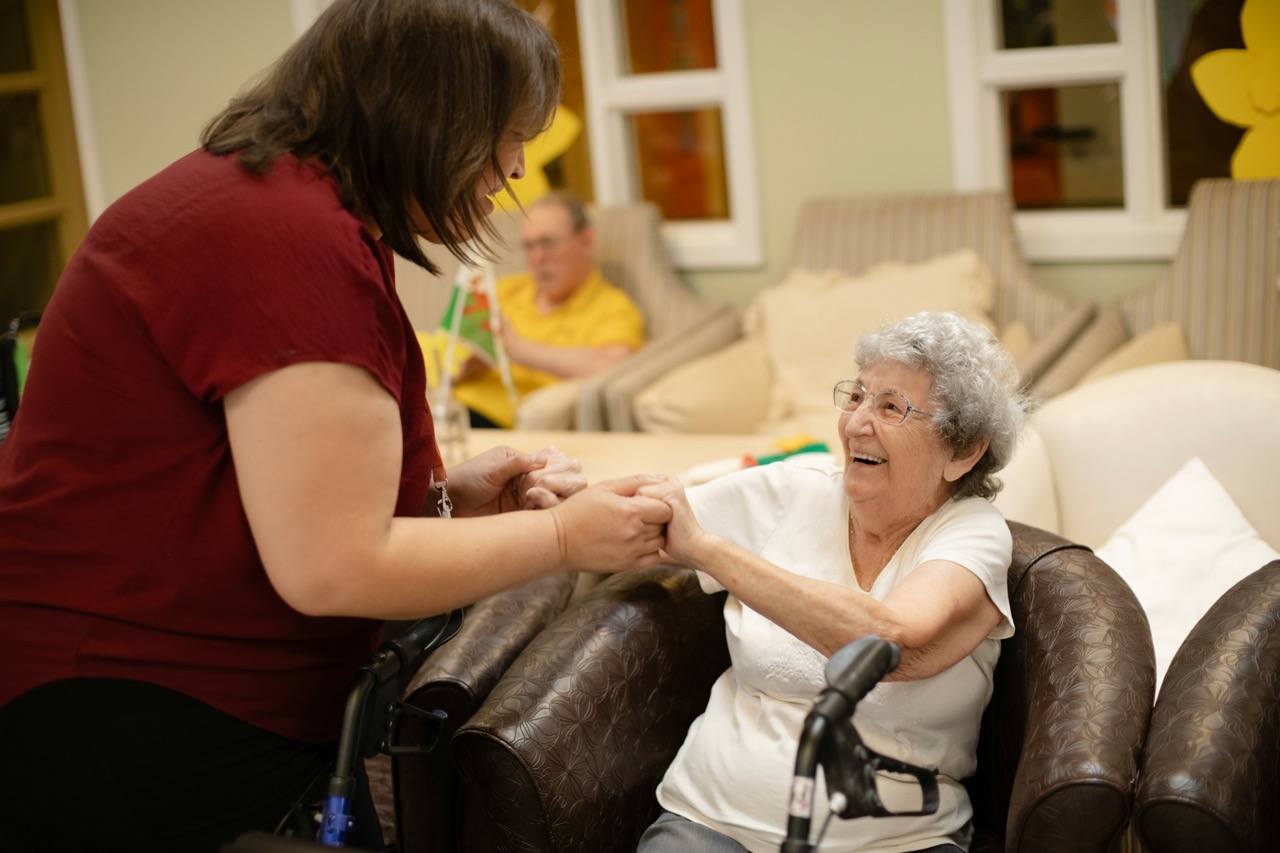
Peer-supported talking circles and structured group engagement fill that gap. They give service members and veterans a consistent, trusted community that does not require a diagnosis, a referral, or a clinical appointment to access.
What the Evidence Shows
Televeda's Hero's Story Talking Circles were developed as the first culturally specific, evidence-informed peer-to-peer suicide prevention program for American Indian and Alaska Native veterans, the group that serves at five times the national rate and faces the highest PTSD and suicide rates of any veteran population.
The results from the pilot, conducted through VA's Mission Daybreak initiative, showed that 100% of participants reported feeling happier and more connected after participating. 96% reported greater overall well-being. 95% reported feeling less lonely. 285 veterans were engaged through that single pilot.
The program won first prize in the VA Mission Daybreak national suicide prevention competition in 2023, a $3.25 million federal award recognizing it as best-in-class peer-to-peer suicide prevention infrastructure.
Those outcomes did not happen because of a clinical protocol. They happened because of sustained, structured peer connection.
The Bottom Line
Resilience is not built in a single training. It is built through sustained connection, trusted relationships, and communities that show up consistently over time.
The military has the infrastructure to deploy hardware, train personnel, and track operational readiness metrics. What it needs now is the engagement layer that connects behavioral health programming to the soldiers who need it most, before they reach a crisis point.
That is what peer support infrastructure does. And the evidence is there to prove it works.
Televeda works with VA partners, military service organizations, tribal communities, and behavioral health agencies to deploy structured peer support programs that reach veterans before crisis — not after.
If you're working on veteran wellness, unit readiness, or suicide prevention and want to explore what evidence-based peer connection looks like in practice, we'd like to talk.








.svg)
.svg)